
Communicating the results of your medical harm event review and analysis with patients or their families is a critical step in harm response. And it’s not easy.
If you’re working on your process to share these results, you’re not alone. According to the Patient Safety Survey, almost all ambulatory surgery center (ASC), hospital, and nursing facility respondents (91%) reported having a system for patients or families to report harm events; however, only 68% have a process in place to close the loop with patients or families by sharing what they learned from their event review (See Figure 1).
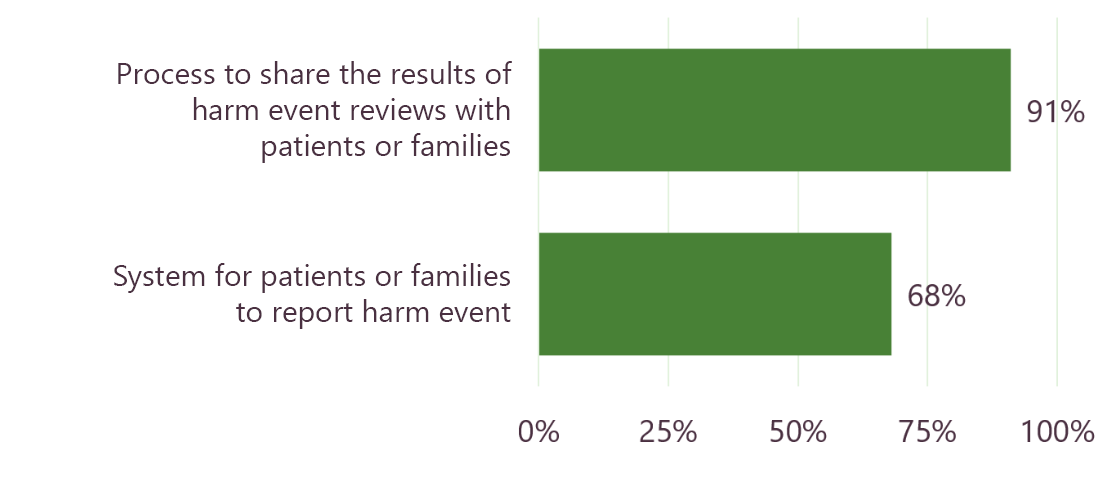
Figure 1: Elements included in facility harm response processes (Includes data from ASCs, hospitals, and nursing facilities)
Working on Your Process? We Have Resources to Help!
While talking to patients or families about medical harm (including the results of your event review and analysis) can be challenging, these important conversations are key to providing better transparency in patient care. Conversations about harm can require a specialized skillset, which is why we’re providing these resources to help:
Early Discussion and Resolution (EDR): EDR is a tool to support open communication with patients or families following medical harm.
CANDOR Toolkit, Module 5: Response and Disclosure: This learning module offers several tools to help facilities build their response and disclosure capabilities, including a communication assessment guide, a disclosure checklist, and videos demonstrating appropriate and inappropriate disclosures.
Responding to Patient Safety Events: This entry in the Patient Safety Primer from the Agency for Healthcare Research and Quality (AHRQ) provides a high-level overview of communication, remediation, and system improvement following an adverse event.